Health Sciences Campus
In 1791, when President George Washington attended the examinations at the Academy
of Richmond County, the school offered post-secondary studies in Latin, French, Greek,
algebra and trigonometry to prepare students for transfer to universities as sophomores.
This year of college work was the beginning of higher education in ÐÇ¿Õ´«Ã½.
In the early 19th century, the seeds of medical education were also germinating. In
1817, the city established a board to oversee the health problems facing the town.
The next year, on property purchased from the Trustees of the Academy, a 10-bed City
Hospital was constructed.
In 1822, Dr. Milton Antony and seven physicians organized the Medical Society of ÐÇ¿Õ´«Ã½
to improve health care and physician education. Four years later, Antony began instructing
students in the City Hospital, joined the following year by Dr. Joseph Adams Eve.
In 1828, the two physicians secured a state charter to establish the Medical Academy
of Georgia, which could award Bachelor of Medicine degrees. The General Assembly revised
the 1828 charter, changing the name to the Medical Institute of Georgia, and in 1833,
to the Medical College of Georgia to more accurately reflect its true mission and
status. MCG moved into a grand new building on Telfair St. in 1835, on property adjoining
the Academy.

When the Civil War began in 1861, both institutions suspended classes as faculty and
students took roles in the war efforts. ARC’s building became a hospital, and the
MCG building became surgeons’ quarters, with its amphitheater serving as an operating
room. When the war ended in 1865, MCG resumed classes, although ARC served as headquarters
for federal troops for two more years before resuming operation.
In 1867, Col. George Washington Rains, the Confederate commandant of the ÐÇ¿Õ´«Ã½ Arsenal
and the ÐÇ¿Õ´«Ã½ Powder Works, was asked to reopen ARC. He became regent (headmaster)
and established a new Scientific Department. ARC students could attend his classes
at MCG, where Rains also taught chemistry. In 1873, MCG became loosely affiliated
with the University of Georgia as its Medical Department and in 1880, Rains became
dean (president) of MCG and served until 1884.
ÐÇ¿Õ´«Ã½ns boasted that it was the only high school in the state offering college credit.
In 1912, legislation officially made MCG the Medical Department of UGA and the institution
moved to a new campus in January 1913.
As the national junior college movement gained momentum, ARC’s fifth year evolved
in 1925 into the first chartered junior college in the state—the Junior College of
ÐÇ¿Õ´«Ã½. The following year, ARC and the JCA moved to a new location on Baker Avenue,
where they would share space for the next 31 years. The Medical College of Georgia
was also evolving. New facilities advanced its academic, research and clinical care
mission. When the University System of Georgia was created in 1932, it absorbed control
of UGA and its medical department and the medical college became the first of ÐÇ¿Õ´«Ã½â€™s
higher education institutions to become part of the USG.
Summerville Campus
In the 1950s, overcrowding reached a critical point at the building shared by ARC
and JCA. A remedy was found when the U.S. government abandoned the ÐÇ¿Õ´«Ã½ Arsenal
in 1955 and the college acquired part of the property, adding to the footprint over
the years and converting the old arsenal buildings to serve educational purposes.
The JCA joined the USG in 1958, becoming ÐÇ¿Õ´«Ã½ College. In 1963, the college became
a four-year institution; the first graduate degrees were added in the 1970s and others
over the next decades.

Then

Now
Previously, the Summerville Campus was used as the ÐÇ¿Õ´«Ã½ Arsenal from 1826 to 1955.
Upon moving to the historic site, where several warehouses used to house German prisoners
during World War II were located and where the antebellum plantation house Bellevue
still stands, the campus transformed existing structures into classrooms and administration
spaces.
The arsenal played an integral part of the equipment supply, maintenance and repair
for various wars, including the Spanish-American War, World War I and World War II.
In 1861, the arsenal was overturned when the state of Georgia seceded from the Union
and didn’t return back to federal control until 1865. Payne Hall was used as the arsenal
headquarters and is one of the four original arsenal structures still in use today.
Noted poet and novelist Stephen Vincent Benét lived there when his father, Col. James
Walker Benét, commanded the ÐÇ¿Õ´«Ã½ Arsenal from 1911 to 1919.
Throughout the post-war years, both institutions grew physically and programmatically.
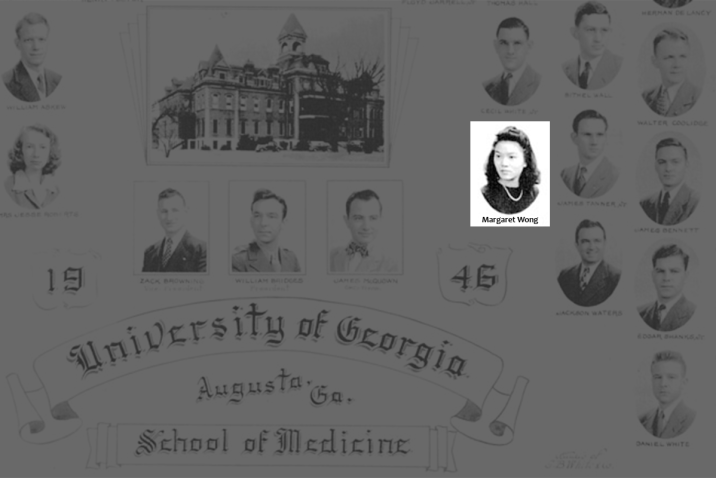
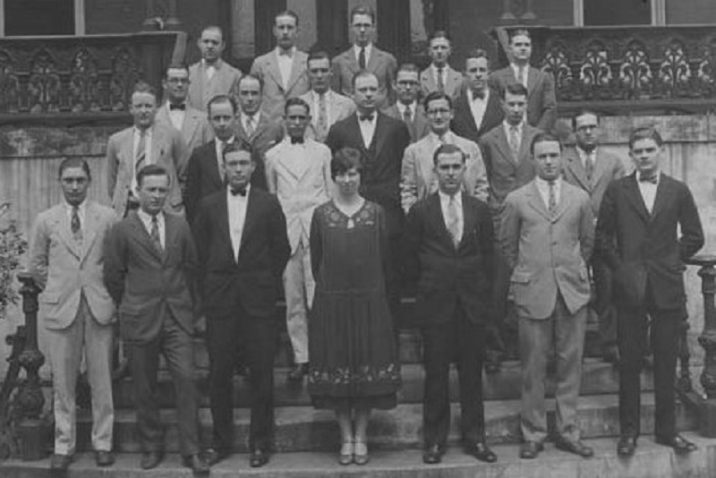
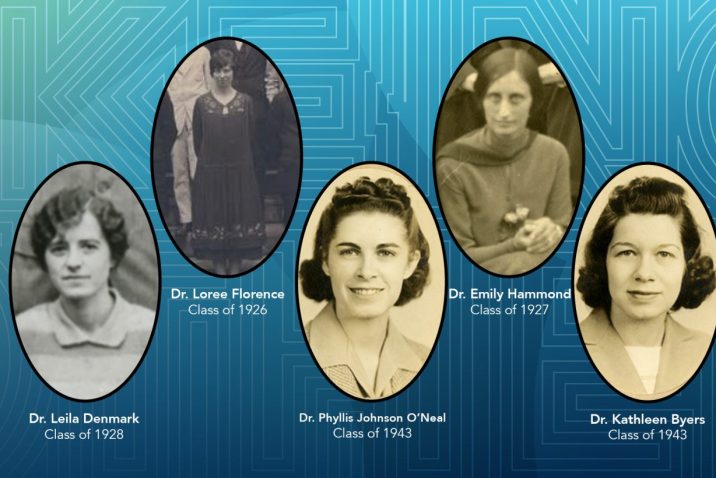
They also made important changes in the student bodies. The medical college began
admitting women in 1922, while the junior college was co-ed from the beginning. Both
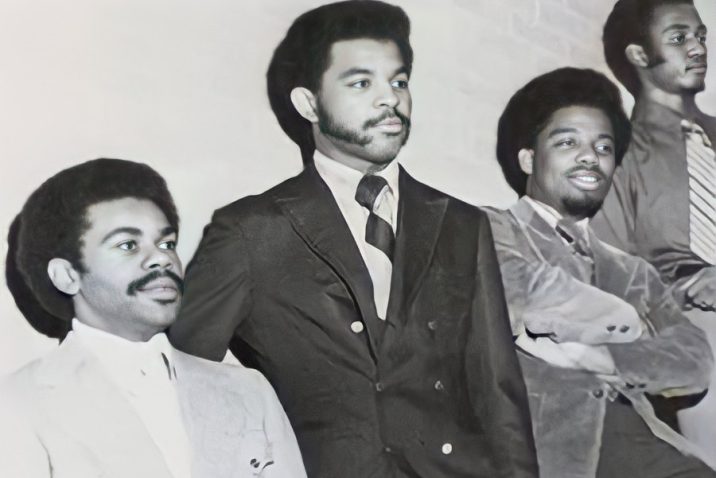
institutions remained racially segregated, however, until the mid-1960s, when the
first African Americans matriculated.

Forest Hills Campus
As the institutions continued to grow, so did the need for space for the athletics
programs. In 1977, the institution secured from the federal government an additional
240 acres in ÐÇ¿Õ´«Ã½'s Forrest Hills neighborhood. In 1989, student housing units
opened the Forest Hills Campus. Christenberry Fieldhouse, which opened in 1991, became
home to the ÐÇ¿Õ´«Ã½ volleyball, women’s basketball and men’s basketball programs and
houses offices for 11 of the Jags’ 13 sports. All administrative and support staff
personnel for the ÐÇ¿Õ´«Ã½ Department of Athletics, as well as the College
of Education’s Kinesiology & Health Science department, are also based in Christenberry.


The Forest Hills Campus added a full-size golf course, baseball, softball and soccer
fields over the next few decades.
Riverfront Campus
In 2017, Georgia Gov. Nathan Deal announced $50 million in funding to establish the
Georgia Cyber Innovation and Training Center in ÐÇ¿Õ´«Ã½. This came after the 2013
announcement from the Pentagon that the U.S. Army Cyber Command would relocate from
Fort Meade in Maryland to Fort Eisenhower in ÐÇ¿Õ´«Ã½. The center, located on Reynolds
Street in downtown ÐÇ¿Õ´«Ã½, was designed to promote modernization in cybersecurity
through public-private partnerships.
The first of the two buildings, the Hull McKnight Building, opened July 10, 2018.
It is named in honor of James M. Hull and William D. McKnight, prominent business
and community leaders in ÐÇ¿Õ´«Ã½. The second building, the Shaffer MacCartney Building,
opened Jan. 10, 2019. It is named in honor of Michael Shaffer, ÐÇ¿Õ´«Ã½'s
executive vice president of strategic partnerships and economic development, and Teresa
MacCartney, former director of the Governor’s Office of Planning and Budget. Both
played central roles in establishing the Cyber Center.

The center is addressing the growing demand for highly trained cybersecurity professionals
by connecting academic programs with innovative start-ups and established technology
companies. The center also serves as an incubator/accelerator for start-up cybersecurity
companies and focuses on research and development by tapping into the assets of Georgia's
research institutions. It houses the ÐÇ¿Õ´«Ã½ School of Computer and Cyber
Sciences and the Cyber Institute.